
We Grow When You Grow
Stitches Per Inch (SPI): The Small Detail That Can Make or Break Your Garment
Let’s talk about something that doesn’t always get the spotlight in garment production but absolutely should.
Table of Contents
ToggleWe Grow When You Grow
Stitches per inch. SPI
It sounds technical. Maybe even minor. But if you’re writing garment specifications and you skip over SPI, you’re ignoring one of the most critical factors in how your product looks, performs, and holds up over time.
Because here’s the truth: the number of stitches per inch directly impacts seam strength, stitch appearance, and seam elasticity especially when you’re working with stretch fabrics. If you care about durability, aesthetics, and performance, you cannot afford to treat SPI as an afterthought.
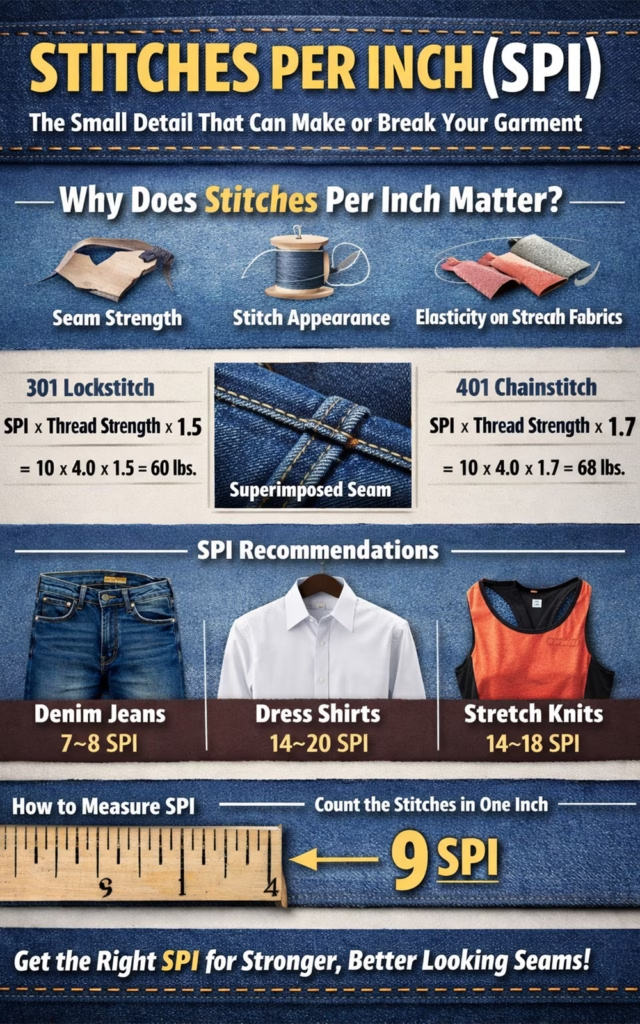
Why Stitches Per Inch Matter in Garment Construction
When you define a garment spec sheet, you carefully choose fabric type, thread, seam construction, and finishing details. But without the right SPI, even the best materials can underperform.
The number of stitches per inch influences:
- Seam Strength
- Stitch Appearance
- Elasticity on Stretch Fabrics
And these aren’t minor concerns. They determine whether a seam holds under pressure or fails.
Now, seam strength isn’t random. It depends on multiple variables working together:
- Type and weight of the fabric
- Stitch and seam construction
- Stitches per inch
- Thread type and size
- Stitch balance (thread tensioning)
Each of these elements plays a role. But SPI? It’s one of the most controllable and most impactful factors in the equation.
We Grow When You Grow
Estimating Seam Strength: Lockstitch vs Chainstitch
For woven fabrics, especially when using a superimposed seam (one fabric placed on top of another), seam strength can be estimated using a simple formula.
301 Lockstitch Seam Strength Formula
Estimated Seam Strength = SPI × Thread Strength (lbs) × 1.5
That 1.5 factor? It’s based on the average loop strength ratio of most sewing threads.
Let’s say you’re using:
- 10 SPI
- Thread strength of 4.0 lbs
The estimated seam strength would be:
10 × 4.0 × 1.5 = 60 lbs
401 Chainstitch Seam Strength Formula
Estimated Seam Strength = SPI × Thread Strength (lbs) × 1.7
Why 1.7? Because a chainstitch consumes almost twice as much thread per inch compared to a lockstitch. More thread in the seam equals more strength.
Using the same 10 SPI and 4.0 lb thread:
- 10 × 4.0 × 1.7 = 68 lbs
That’s a noticeable increase just by changing stitch construction.
How Increasing SPI Changes Seam Strength
Let’s look at a practical example.
Using a 301 lockstitch superimposed seam with:
- T-24 Perma Core thread
- Thread strength: 2.6 lbs
Here’s how seam strength increases with SPI:
- 6 SPI → 23.4 lbs
- 8 SPI → 31.2 lbs
- 10 SPI → 39 lbs
- 12 SPI → 46.8 lbs
That’s a dramatic difference.
Now switch to a lower tenacity T-27 spun polyester thread with 2.2 lbs strength:
- 6 SPI → 20 lbs
- 8 SPI → 26 lbs
- 10 SPI → 33 lbs
- 12 SPI → 40 lbs
The takeaway? Seam strength isn’t just about SPI. It’s also about thread strength. But SPI amplifies everything.
Generally speaking, more stitches per inch mean stronger seams unless the fabric itself becomes damaged by excessive needle penetrations.
That’s rare, but it can happen with delicate materials.
We Grow When You Grow
The Hidden Risk: Bobbin Thread Substitution
Some manufacturers use a smaller bobbin thread in lockstitch seams to reduce how often operators need to change bobbins.
Sounds efficient, right?
But here’s the catch: seam strength is determined by the weaker thread. If your bobbin thread is weaker than your needle thread, your seam strength drops accordingly.
In other words, production shortcuts can quietly weaken your garment.
Seam strength is always determined by the weaker thread.
If the bobbin thread is weaker than the needle thread, the entire seam becomes weaker no matter how strong the top thread is.
That means:
- Reduced seam durability
- Higher risk of seam breakage
- Poor wash performance
- Increased customer complaints
- Potential order rejection
In simple terms, production shortcuts can quietly weaken your garment without you even noticing.
As a clothing brand, you should always ask your manufacturer:
- Are both needle and bobbin threads matched in strength?
- What thread count is being used?
- Has seam strength been tested?
Because in garment manufacturing, small decisions create big consequences.
Efficiency should never compromise durability.
Strong seams build strong brands.
No Shortcuts at Fashion Flair
At Fashion Flair Pvt Ltd clothing manufacturing factory., we don’t believe in production shortcuts.
We use properly matched needle and bobbin threads to maintain full seam strength and garment durability.
Because we understand one simple rule:
A seam is only as strong as its weakest thread.
That’s why our focus is not just speed
it’s strength, quality, and long-term performance.
- No hidden compromises.
- No silent quality drops.
Just reliable stitching that protects your brand reputation.
How to Measure Stitches Per Inch
Measuring SPI is simple.
Calculating SPI:
- Take a ruler and place it along the seam.
- Measure exactly one inch.
- Count the number of stitches within that one-inch section.
The number you count equals the SPI.
Example:
If you count 10 stitches within one inch → the seam is sewn at 10 SPI.
You can also use a stitch counter tool for more accurate measurement in production settings.
Recommended SPI for Woven Garments
Different garments demand different stitch densities. It’s not one size fits all.
Here’s what’s typically recommended:
Denim Jeans, Jackets, Skirts
7–8 SPI
Fewer stitches create a more pronounced contrast stitch appearance.
Twill Pants or Shorts
8–10 SPI
Higher SPI helps minimize seam grinning.
Trousers, Dress Pants, Slacks
10–12 SPI
Some operations like serging panels may require longer stitch lengths.
Dresses and Skirts
10–12 SPI
Lockstitch-heavy operations require sufficient strength.
Dress Shirts or Blouses
14–20 SPI
Higher SPI allows smaller diameter threads and reduces seam puckering.
Casual Shirts and Tops
10–14 SPI
Higher SPI gives a tailored look and better seam coverage when serging.
Children’s Wear
8–10 SPI
Balances strength with faster cycle times.
Blindstitch Operations
3–5 SPI
Longer stitch length reduces visible needle penetration marks.
Button Sewing (4-Hole)
16 stitches per cycle
Button machines operate on fixed stitch cycles.
Buttonholes (½” Purl or Whip Stitch)
85–90 stitches
Usually sewn vertically using a lockstitch buttonhole machine.
Recommended SPI for Knit Garments
Knits behave differently. They stretch. They move. And they introduce two critical issues:
- Seam Grinning
- Stitch Cracking
Seam grinning happens when stitch balance is too loose and the seam opens excessively under stress.
Stitch cracking occurs when thread tensions are too tight or when there aren’t enough stitches per inch and threads rupture under pressure.
Because knits stretch, elasticity becomes the priority.
Here are standard recommendations:
Jersey T-Shirts, Tops, Polos
10–12 SPI
Too many stitches increase needle cutting risk.
Swimwear
12–16 SPI
More SPI improves elasticity and reduces stitch cracking.
Underwear
12–14 SPI
Elastic seams require higher stitch density.
Intimates
12–16 SPI
Higher elasticity demands higher SPI.
Dresses and Skirts (Knit)
10–12 SPI
Infantwear
10–12 SPI
Fleece
10–12 SPI
Higher SPI improves seam coverage.
Stretch Knits (Lycra®, Spandex®, etc.)
14–18 SPI
Higher SPI enhances seam elasticity.
Medium to Heavy Sweaters
8–10 SPI
Hosiery and Socks
35–50 SPI
Fine threads require high stitch density to prevent seam grinning and improve elasticity.
The Production Cost Factor
Let’s talk efficiency.
More stitches per inch mean:
- Longer sewing cycles
- Higher labor costs
- Lower production output
Here’s a real world comparison:
A machine sewing at 5,000 stitches per minute:
- At 8 SPI → 17.4 yards of seam per minute
- At 14 SPI → 9.9 yards of seam per minute
That’s nearly half the output.
And more SPI also means more thread consumption which increases cost.
So yes, higher SPI increases seam strength and elasticity. But it also raises production time and material usage.
It’s always a balance.
The Bigger Picture: Strength, Appearance, and Performance
When you step back and look at it, SPI isn’t just a technical number.
It’s a performance decision.
Choose too few stitches, and you risk seam failure. Choose too many, and you may slow production, increase costs, or even damage delicate fabrics.
The right SPI:
- Enhances seam strength
- Improves appearance
- Maintains elasticity
- Optimizes production efficiency
It’s a balancing act between durability and cost.
And if you’re writing garment specifications, SPI deserves a clear line item every single time.
Final Thoughts: Why SPI Should Never Be Overlooked
Stitches per inch might seem small. But in garment manufacturing, small details define quality.
Whether you’re working with woven denim, tailored dress shirts, stretch swimwear, or fine hosiery, the correct SPI ensures the seam performs exactly as intended.
The wrong SPI? It can weaken your product, increase returns, or drive up costs without improving performance.
So the next time you draft garment specs, don’t skip it.
Define it.
Because in the world of sewing, strength, appearance, and performance often come down to something as simple and as powerful as stitches per inch.
Frequently Asked Questions
Stitches Per Inch (SPI) refers to the number of stitches sewn within one inch of a seam. It determines how tight or loose the stitching is. SPI directly affects seam strength, stitch appearance, elasticity, and overall garment durability.
In most cases, yes. Increasing SPI generally improves seam strength because more thread is used per inch of seam. However, excessive SPI can sometimes damage delicate fabrics due to too many needle penetrations, which may weaken the material instead of strengthening it.
SPI recommendations vary depending on the garment type. For example, denim jeans typically use 7–8 SPI, dress shirts use 14–20 SPI, and trousers often require 10–12 SPI. The correct SPI balances seam strength, appearance, and production efficiency.
Knit and stretch fabrics usually require higher SPI to maintain seam elasticity and prevent stitch cracking. For example, stretch knits like Lycra® or Spandex® often use 14–18 SPI, while swimwear typically requires 12–16 SPI.
Higher SPI increases sewing time and thread consumption. More stitches per inch mean longer machine cycles and higher labor costs. Manufacturers must balance seam strength and garment performance with production efficiency.