
Embroidery Clothing Manufacturer for Private Label Brands
Embroidery is the finish customers can see, touch and trust. Stitched thread says quality in a way few other decorations can, and it lasts as long as the garment does. Fashion Flair is an embroidery clothing manufacturer based in Sialkot, Pakistan. We stitch logos, lettering and artwork on jackets, hoodies, sweatshirts and sportswear we manufacture for private label brands, with eight embroidery styles, one contact and one timeline.
This guide explains each embroidery type, how to choose between them, how digitising decides quality, and what to send us for a quote.
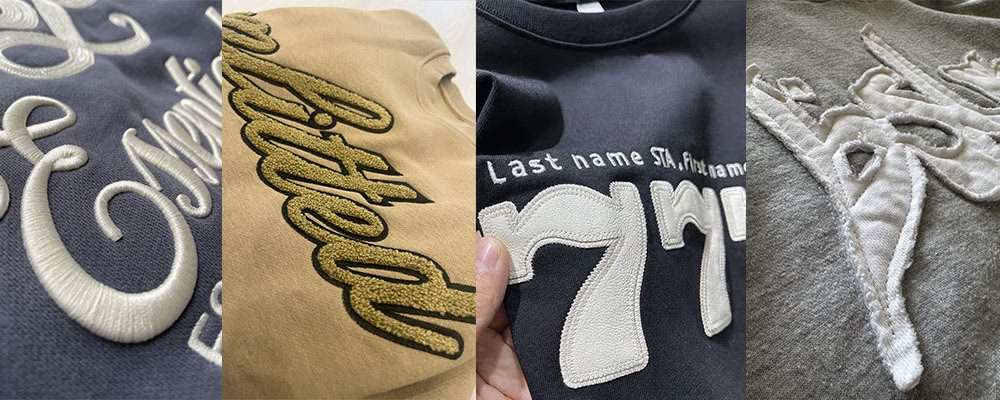
Embroidery at a Glance
| MOQ | 30 pieces per design |
|---|---|
| Embroidery types | Flat, patch, 3D puff, distressed, appliqué, chenille, tackle twill and mixed |
| Setup | We turn your artwork into a stitch file (digitising) |
| Free before production | Artwork check and mockup |
| Sampling | Sample stitched on your order’s fabric before bulk |
| Lead time | Depends on quantity and complexity; share your design for an exact turnaround |
| Ships to | Worldwide |
Embroidery Types We Offer
As an embroidery clothing manufacturer, we offer eight styles. Each has its own look, feel and best use, and here is what each one does.
Flat Embroidery
The classic. Thread is stitched directly onto the fabric, using satin stitches for letters and borders and fill stitches for larger areas. It handles fine detail well and keeps the garment light. Best for: logos, monograms and small-to-medium graphics on any garment.
Patch Embroidery
The design is stitched on its own backing with a finished border, then attached to the garment. Because it is made separately, it works on thick or stretchy fabrics that are hard to stitch directly, and every patch comes out identical. Best for: jackets, workwear, team wear and brand labels.
3D Puff Embroidery
Foam is placed under dense satin stitches, which lifts the lettering or shape off the fabric. The result is a bold, raised look with clean edges. It needs thick letters and simple shapes. Best for: chest logos and lettering on hoodies, jackets and streetwear. (Want a raised look without stitching? See our puff printing service.)
Distressed Embroidery
A worn, vintage finish, with frayed or faded details that look aged on purpose. It gives a lived-in look that suits heritage and street brands, and each piece has its own character. Best for: vintage-style hoodies, jackets and casual wear.
Appliqué Embroidery
Pieces of fabric, such as twill or felt, are cut to shape and stitched onto the garment with a decorative border. This covers large areas with fewer stitches, so it stays lighter and often costs less than a fully stitched design of the same size. Best for: big letters, bold shapes and varsity-style pieces.
Chenille Embroidery
Looped yarn creates a soft, plush, textured surface that stands out on any garment. It is the signature look of varsity and letterman jackets. Best for: large letters and emblems on jackets and sweatshirts. See our letterman jackets.
Tackle Twill Embroidery
Letters and numbers are cut from twill fabric and stitched down at the edges. It is tough, flat and highly readable, which is why it has long been the choice for team names and numbers. Best for: jerseys, team uniforms, varsity jackets and sportswear.
Mixed Embroidery
Different techniques combined in one design, for example flat embroidery with 3D puff and appliqué. Mixing adds depth, so a small detail in puff can stand out against a flat background. Best for: premium collections, statement jackets and signature branding.
Which Embroidery Type Should You Choose?
| Type | Look and feel | Best for |
|---|---|---|
| Flat | Smooth, detailed, light | Logos and small text |
| Patch | Consistent, removable look | Thick fabrics, jackets, workwear |
| 3D puff | Raised, bold, clean edges | Chest logos and lettering |
| Distressed | Worn, vintage | Heritage and street brands |
| Appliqué | Layered fabric, lighter than full stitching | Large letters and shapes |
| Chenille | Plush, textured | Varsity and letterman styles |
| Tackle twill | Flat, tough, readable | Team names and numbers |
| Mixed | Layered, premium depth | Statement and signature designs |
Still unsure? Send your logo to our embroidery clothing manufacturer team and we will recommend the best style for your garment and budget.
Embroidery vs. Printing: How to Decide
| Method | Best for | Watch out for |
|---|---|---|
| Embroidery | Logos, text and bold shapes on jackets, hoodies and sportswear; a premium, durable finish | Gradients, photos and very fine detail |
| Screen printing | Large bold graphics, big repeat orders | Ink sits on the surface |
| DTF | Full-colour artwork and fine detail | Less of a premium feel than stitching |
| 3D silicone | Raised, rubber-like logos on sportswear | Smooth rather than stitched |
An honest embroidery clothing manufacturer will tell you when printing is a better fit. If your design has gradients, a photo or a very large solid area, we will suggest a print instead. If it is a logo or lettering, embroidery usually looks more premium and lasts longer.
Digitising: Why It Decides Embroidery Quality
Every embroidery clothing manufacturer starts with digitising. Your artwork is a picture. A machine cannot stitch a picture, so it has to be converted into a stitch file that tells the machine where to stitch, in which direction and how densely.
Good digitising is the difference between crisp lettering and a puckered, uneven logo. It sets the stitch types, thread direction, density and the underlay that supports the stitches. Fabric changes the answer too. Stretch knits need a firm backing, and fluffy fabrics like fleece need a topping so stitches do not sink. We plan these for every garment, then stitch a sample so you can approve it before bulk.
Design Tips From an Embroidery Clothing Manufacturer
- Keep it simple. Bold shapes and clean lines stitch best. Thread cannot reproduce gradients or photos.
- Mind the lettering size. Very small text can fill in and become unreadable. Tell us the size you want and we will confirm it works.
- Limit colours. Each thread colour adds a change, and cost. Three to six colours is a good range for most logos.
- Choose thread for the job. We match thread to your colour references as closely as the thread range allows.
- Think about weight. A large, dense design can feel stiff or heavy on thin fabric. Appliqué or patches are lighter ways to cover big areas.
- Contrast matters. Pale thread on pale fabric disappears. Pick thread that stands out from the garment.
Garments and Placements We Embroider
- Varsity, letterman and bomber jackets
- Hoodies and sweatshirts (see Streetwear)
- Sportswear and team uniforms (see Sportswear)
- T-shirts, polos and casual wear
- Gym wear and activewear (see Gym Wear)
Common placements are left chest, sleeve, back, hem and across the chest. We embroider only garments we manufacture for your order, so the fabric, fit and stitching are planned together. For a full brand build, see our private label clothing manufacturing service.
How Our Embroidery Process Works
- Send your brief. Artwork, garment type, quantity, size and placement. Vector files (AI, EPS, PDF) are best.
- Artwork check and mockup. We review the design for stitching, suggest the best embroidery type and send a free mockup.
- Digitising. Your artwork becomes a stitch file, set up for the fabric and technique.
- Sample. We stitch a sample on your order’s fabric so you can approve colour, size, placement and feel.
- Bulk embroidery. Production begins only after your sign-off.
- Quality control. See below.
- Labelling, packing and shipping. Neck labels, hang tags and branded packaging can be added at the same time. We send photos and videos during production and ship worldwide.
For the full picture of an order, read our manufacturing process and sample policy.
Our Quality Control
Quality control is what protects your brand when you hire an embroidery clothing manufacturer. Every order goes through our three-level QC system. For embroidery, the checks include:
- Stitch quality, with no skipped stitches, loose threads or gaps
- Registration, so outlines line up with fills
- Puckering, so fabric lies flat around the design
- Thread colour against your approved sample
- Placement and size, measured from a fixed point (collar, hem or seam) on every garment
- Back-of-garment finish, with backing trimmed neatly and thread ends cleaned
Rejected pieces are removed, not shipped.
Caring for Embroidered Garments
Embroidery is durable, but gentle care keeps it looking new. We recommend telling your customers to wash the garment inside out, avoid very high heat in the dryer, and iron from the back, never directly on the stitching. Chenille and puff pieces last longest with a gentle cycle. We can add care instructions to your garment labels.
What Affects Embroidery Cost
Every embroidery clothing manufacturer prices a little differently. We quote per project, because the price depends on a few clear factors:
- Stitch count, which depends on the size and density of the design
- Embroidery type, because 3D puff, chenille, tackle twill and mixed styles take more materials and time than flat
- Number of colours and thread changes
- Number of placements on each garment
- Garment type and fabric
- Quantity, as setup and digitising costs are spread across more pieces
For more on pricing, see our price guide. We give a written quote before any work starts, so there are no surprise charges.
Who We Work With as an Embroidery Clothing Manufacturer
We work with clothing startups, streetwear and varsity labels, sports teams and schools, and companies ordering branded apparel. Some customers order a first run to test a logo. Others come back every season with new designs.
Why Brands Choose Fashion Flair as Their Embroidery Clothing Manufacturer
- Eight embroidery styles in one place. From flat to chenille to mixed, so you do not need several suppliers.
- Honest advice. We recommend the style that suits your design and fabric, or a print if that works better.
- Design help built in. We check your artwork and send a free mockup.
- Production updates. Photos and videos during the run.
- A registered company you can verify. Fashion Flair (SMC-Private) Limited, SECP Incorporation No. 0269917, FBR NTN E862604, SCCI membership C-4058.
- Worldwide shipping, with options and timelines shared before production.
Frequently Asked Questions
What is your MOQ as an embroidery clothing manufacturer?
Our MOQ is 30 pieces per design. Because embroidery needs digitising and setup, smaller runs cost more per piece, so we can advise on the most economical quantity for your budget.
What is digitising, and do I need to pay for it?
Digitising converts your artwork into a stitch file the machine can read. Every embroidered design needs it. Ask us for a written quote and we will show how it is handled.
What is the difference between flat and 3D puff embroidery?
Flat embroidery lies close to the fabric. 3D puff places foam under the stitches to lift the design off the fabric for a bold, raised look. Puff works best with thick letters and simple shapes.
What is the difference between appliqué and tackle twill?
Both stitch fabric onto a garment. Appliqué uses cut fabric shapes, often layered, for bold designs. Tackle twill uses twill fabric letters and numbers, mostly for teams and varsity styles.
When should I choose chenille?
Choose chenille for a plush, textured look on large letters and emblems, especially on varsity and letterman jackets.
Can you embroider small text or fine detail?
Up to a point. Very small text and fine lines can fill in. We check the design before digitising and adjust it, or suggest a print for detailed artwork.
Can you match my brand’s thread colours?
We match as closely as the thread range allows, using your Pantone or colour references and an approved sample. Tell us if an exact brand colour is critical.
Will embroidery damage or pucker my garment?
Not when it is set up correctly. Puckering usually comes from too-dense stitching or the wrong backing for the fabric. We plan both for each garment and check the sample first.
Can I send my own blank garments to be embroidered?
No. We are a manufacturer, so we embroider only garments we make for your order. That lets us choose a fabric that suits stitching, test it first, and keep results consistent from the first piece to the last.
Can I get a sample before bulk production?
Yes. We stitch a sample so you can approve colour, size and placement. See our sample policy for details on cost and timing.
How long does production take?
It depends on the quantity and complexity of the work. Share your design or mockup and we will give you an exact turnaround, confirmed in writing before we start.
Can you add my labels, hang tags and packaging?
Yes. Woven or printed neck labels, hang tags and custom packaging can be added in the same order.
Do you ship internationally?
Yes. As an embroidery clothing manufacturer working with brands abroad, we ship worldwide and share shipping options and estimated delivery times before production begins.
Ready to Add Embroidery to Your Collection?
Send us your artwork, the garment you have in mind and your target quantity. We will reply with a mockup and a clear quote within 24 hours on working days. Tell us about your project and see why brands choose us as their embroidery clothing manufacturer.
Or email info@fashionflairpvt.com