
Tie Dye Clothing Manufacturer for Private Label Brands
No two tie dye pieces are exactly alike, and that is the whole appeal. Every spiral, burst and swirl is a little different, which gives your customers something that feels one of a kind. Fashion Flair is a tie dye clothing manufacturer (also written tie and die) based in Sialkot, Pakistan. We make and dye hoodies, sweatshirts, joggers, tees and loungewear for private label brands, with one contact and one timeline.
This guide explains how tie dye is made at factory scale, how we keep a collection consistent when every piece is different, which fabrics work, and what to send us for a quote.
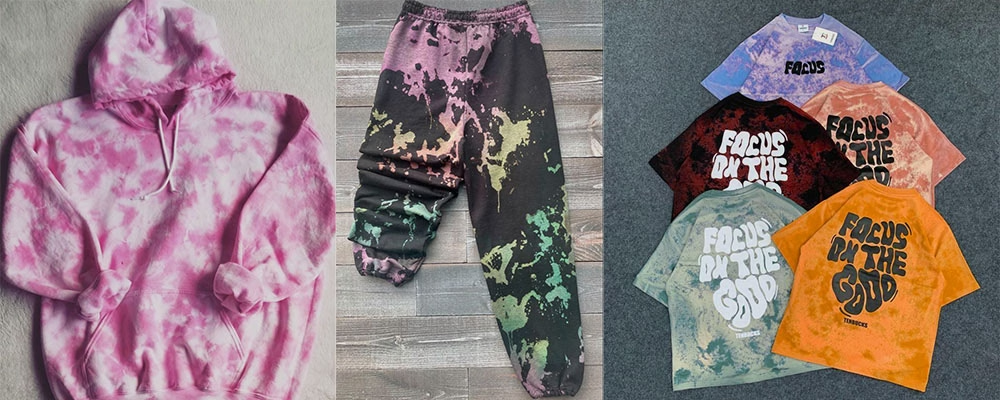
Tie Dye at a Glance
| MOQ | 30 pieces per design |
|---|---|
| Patterns | Spiral, bullseye, crumple, stripe, dip dye and reverse tie dye |
| Best fabrics | Cotton and cotton-rich fabrics, including fleece |
| Free before production | Artwork check and mockup |
| Sampling | Master sample approved by you before bulk |
| Lead time | Dyeing, rinsing and drying add time; share your design for an exact turnaround |
| Ships to | Worldwide |
What Is Tie Dye, and How Is It Made at Factory Scale?
Tie dye is a resist-dyeing method. The fabric is folded, twisted, scrunched or bound with string or rubber bands, so the dye reaches some areas and not others. When the ties come off, the pattern appears.
For cotton we mainly use fibre-reactive dyes, which bond chemically with the fibre once an alkali is added. That is why the colours come out vivid and stay put. After dyeing, the garment is rinsed and washed to remove loose dye, then dried. Because it is done by hand and by eye, every piece has its own pattern.
Tie Dye Patterns We Make
- Spiral. The classic swirl, coloured in wedges from the centre.
- Bullseye (target). Concentric rings of colour, popular on hoodies.
- Crumple. Scrunched fabric for a random, marbled look.
- Stripes. Accordion-folded fabric for bands of colour.
- Dip dye and ombré. One colour fading into another, or into the base fabric.
- Reverse tie dye. Colour is removed with bleach to make light patterns on a darker garment.
Not sure which suits your brand? Send us a reference photo and your colours, and we will tell you what we can match.
Fabrics and Garments for Tie Dye
| Fabric | Result |
|---|---|
| 100% cotton | Brightest, sharpest colour. The best choice |
| Cotton-rich blends | Works, but colours look softer and more muted |
| Viscose and rayon | Rich, fluid colour, though the fabric needs gentle handling |
| Heavy fleece (hoodies, joggers) | Works well, but thick fabric needs more dye time and shrinks more |
| Polyester | Does not take reactive dye. For a tie dye look on polyester, we suggest sublimation printing |
The base colour matters. White and light bases show the truest colour. Dark garments need colour removed first, which is what reverse tie dye does.
Every Piece Is Different. How Do We Keep a Collection Consistent?
This is the question every brand asks a tie dye clothing manufacturer. We do not promise identical pieces, because that would not be tie dye. We promise a consistent look.
- A master sample. You approve one sample. It becomes the reference for colour, pattern style and scale.
- An agreed range. We agree how much natural variation is acceptable before production, so there are no surprises.
- The same dye lot. Pieces for one order are dyed with matching dye and fabric lots, so shades stay close.
- Photo approvals. We send photos during production so you can check the pattern while there is still time to adjust.
Tie Dye vs. Other Ways to Add Colour
| Method | Best for | Watch out for |
|---|---|---|
| Real tie dye | Authentic, one-of-a-kind patterns on cotton | Pieces vary; colours are not exact Pantone matches |
| Solid garment dye | One even, deep colour | No pattern |
| Sublimation (tie dye look) | Identical pieces with a tie dye print on polyester | A printed pattern, not real dye, and polyester only |
| Screen printing | Logos and graphics over a dyed garment | Printed on top, not part of the dye |
An honest tie dye clothing manufacturer will tell you when a printed look suits you better. If every piece must match exactly, sublimation may be the right choice. If you want the real, hand-made character, choose real tie dye.
Design Tips From a Tie Dye Clothing Manufacturer
- Keep to two or three colours. Neighbouring colours (blue and green, pink and orange) blend cleanly. Opposite colours (red and green, blue and orange) can turn muddy brown where they meet.
- Choose the base carefully. White or natural shows true colour. Coloured bases mix with the dye.
- Plan the thread. Polyester thread does not take reactive dye, so it stays its original colour. We choose thread to match your look.
- Add logos after dyeing. Branding goes on afterwards, using puff, screen printing, DTF or embroidery, so it stays crisp.
- Allow for shrinkage. Cotton shrinks after wet processing, so we plan the pattern and size chart together.
Garments We Tie Dye
- Hoodies and sweatshirts (see Streetwear)
- Joggers, sweatpants and shorts
- T-shirts and long sleeves
- Matching loungewear sets
- Gym and casual wear (see Gym Wear)
We tie dye only garments we manufacture for your order, so the fabric, pattern, fit and dye are planned together. For a full brand build, see our private label clothing manufacturing service.
How Our Tie Dye Process Works
- Send your brief. Garment type, quantity, colours, pattern style and reference photos.
- Mockup and fabric choice. We confirm the fabric and base colour, and send a free mockup.
- Master sample. We make a sample in your pattern and colours. You approve it, with the acceptable range, before bulk.
- Tying and dyeing. Garments are folded, bound and dyed in your colours.
- Fixing, rinsing and washing. Dye is fixed, then loose dye is washed out so colours stay put in your customer’s first wash.
- Drying and finishing. Garments are dried, checked and finished, then branding is added if needed.
- Quality control. See below.
- Labelling, packing and shipping. Neck labels, hang tags and branded packaging can be added at the same time. We send photos and videos during production and ship worldwide.
For the full picture of an order, read our manufacturing process and sample policy.
Our Quality Control
Quality control is what protects your brand when you hire a tie dye clothing manufacturer. Every order goes through our three-level QC system. For tie dye, the checks include:
- Pattern and colour against your approved master sample and agreed range
- Dye coverage, so there are no unintended white patches or blotches
- Colour bleeding check on sample pieces, so colour does not run in the wash
- Measurements after dyeing, to catch shrinkage against your size chart
- Final inspection for stitching, stains and fabric flaws before packing
Rejected pieces are removed, not shipped.
If your market requires restricted-substance compliance or colour fastness testing, such as OEKO-TEX, REACH or ISO 105, tell us before production starts.
Caring for Tie Dye Garments
Tie dye lasts longest with gentle care. We recommend telling your customers to wash the first few times in cold water, separately and inside out, with mild detergent. Avoid bleach, and dry away from strong direct sunlight to keep colours bright. We can add care instructions to your garment labels.
What Affects Tie Dye Cost
Every tie dye clothing manufacturer prices a little differently. We quote per project, because the price depends on a few clear factors:
- Number of colours and pattern complexity, since detailed folding and multiple colours take longer
- Garment type and fabric weight, because heavy fleece needs more dye and time
- Extra steps such as reverse tie dye or added prints and embroidery
- Quantity, as sampling and setup costs are spread across more pieces
- Trims, labels and packaging
For more on pricing, see our price guide. We give a written quote before any work starts, so there are no surprise charges.
Who We Work With as a Tie Dye Clothing Manufacturer
We work with clothing startups, streetwear and loungewear labels, festival and lifestyle brands, and companies ordering branded apparel. Some customers order a first run to test a colourway. Others come back every season with new collections.
Why Brands Choose Fashion Flair as Their Tie Dye Clothing Manufacturer
- We make the garment, then dye it. Fabric, pattern, sewing and dye are planned together, including thread and trims.
- Honest advice. We tell you when real tie dye or a printed look suits your goal better.
- Consistency built in. A master sample and agreed range keep every order on brand.
- Production updates. Photos and videos during the run.
- A registered company you can verify. Fashion Flair (SMC-Private) Limited, SECP Incorporation No. 0269917, FBR NTN E862604, SCCI membership C-4058.
- Worldwide shipping, with options and timelines shared before production.
Frequently Asked Questions
What is your MOQ as a tie dye clothing manufacturer?
Our MOQ is 30 pieces per design. Tie dye is done in batches, so very small runs cost more per piece, and we can advise on the most economical quantity for your budget.
Will every piece look exactly the same?
No, and that is part of tie dye’s character. Each piece will follow your approved master sample in colour, pattern style and scale, within an agreed range.
Can you match my brand colours exactly?
We match as closely as dyeing allows, using your reference and a master sample. Dye on fabric varies more than printed ink, so exact Pantone matching is not realistic. If an exact match matters, sublimation or screen printing is a better fit.
What is the difference between tie dye and tie and die?
They are the same thing. “Tie and die” is a common spelling in South Asia, and “tie dye” is the usual international term.
Will the colours run in the wash?
Dye can bleed a little in the first washes, especially with deep colours. We wash out loose dye during production and check sample pieces. We also recommend your customers wash cold and separately at first.
Which fabrics can you tie dye?
Cotton and cotton-rich fabrics, including fleece, work best. Viscose also works. Polyester does not take reactive dye, so for a tie dye look on polyester we recommend sublimation printing.
Can you add logos, prints or embroidery on tie dye garments?
Yes. We add branding after dyeing with puff, screen printing, DTF or embroidery, so it stays sharp over the dyed fabric.
Can I send my own blank garments to be dyed?
No. We are a manufacturer, so we dye only garments we make for your order. That lets us choose fabric and thread that suit dyeing, test it first, and keep results consistent from the first piece to the last.
Can I get a sample before bulk production?
Yes. We make a master sample for you to approve. See our sample policy for details on cost and timing.
How long does production take?
It depends on the quantity and complexity of the work. Dyeing, rinsing and drying add time. Share your design or reference photo and we will give you an exact turnaround, confirmed in writing before we start.
Can you add my labels, hang tags and packaging?
Yes. Woven or printed neck labels, hang tags and custom packaging can be added in the same order.
Do you ship internationally?
Yes. As a tie dye clothing manufacturer working with brands abroad, we ship worldwide and share shipping options and estimated delivery times before production begins.
Ready to Create Your Tie Dye Collection?
Send us your reference photo, the garment you have in mind and your target quantity. We will reply with a mockup and a clear quote within 24 hours on working days. Tell us about your project and see why brands choose us as their tie dye clothing manufacturer.
Or email info@fashionflairpvt.com