
Sublimation Printing Clothing Manufacturer for Private Label Brands
Picture a design that covers a jersey from collar to hem and still feels like plain fabric. That is dye sublimation. The ink does not sit on the fabric. It becomes part of the fibres, so there is nothing to crack, peel or feel. Fashion Flair is a sublimation printing clothing manufacturer based in Sialkot, Pakistan. We make and print jerseys, activewear, hoodies and team uniforms for private label brands, with one contact and one timeline.
This guide covers how sublimation works, which fabrics it needs, what can go wrong, how it compares with other methods, and what to send us for a quote.
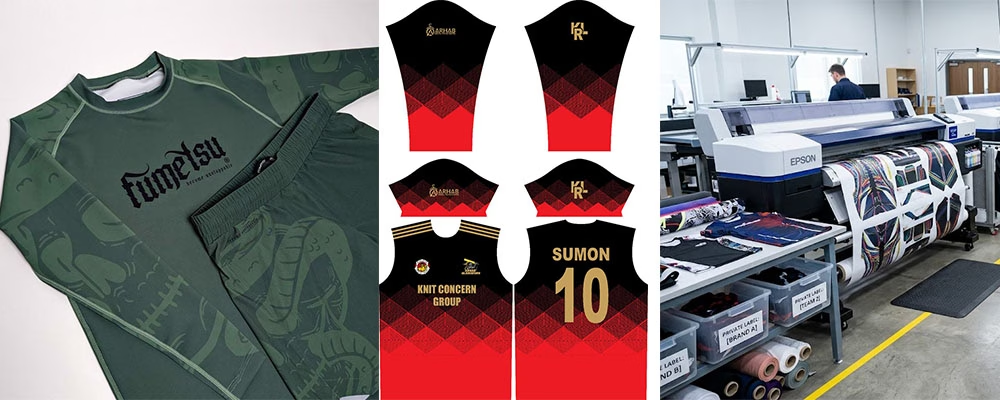
Sublimation Printing at a Glance
| MOQ | 30 pieces per design |
|---|---|
| Best for | All-over, edge-to-edge prints, jerseys, activewear and team uniforms |
| Fabrics | Polyester and high-polyester blends in white or light colours |
| Free before production | Artwork check and mockup |
| Sampling | Test print on your order’s fabric before bulk |
| Lead time | Depends on quantity and complexity; share your design for an exact turnaround |
| Ships to | Worldwide |
What Does a Sublimation Printing Clothing Manufacturer Actually Do?
Sublimation printing, also called dye sublimation, is a heat transfer process. Your artwork is printed with sublimation ink onto transfer paper. The paper is then pressed against polyester fabric at high heat, roughly 190 to 200°C (about 380 to 400°F). At that temperature the dye turns from a solid into a gas without becoming liquid, enters the polyester fibres and locks in as they cool.
That is why a sublimated print has no raised layer, no texture and no coating that can crack. The colour is inside the fabric, so the fabric keeps its stretch, drape and breathability. It is also a dry process, with no wet washing step after printing.
Why Brands Choose Sublimation
- Edge-to-edge, all-over prints. Patterns, gradients, photos and team graphics can cover the whole garment.
- Unlimited colours. Cost does not rise with the number of colours, because there are no screens.
- Fade-resistant and durable. The dye is part of the fibre, so it does not peel and resists fading through repeated washing.
- Comfortable. No ink layer means the garment stays light and breathable, which matters for moisture-wicking sportswear.
- Consistent. The hundredth jersey matches the first, which is vital for team kits.
Which Fabrics Work, and Which Do Not
Sublimation dye only bonds to polyester or polymer-coated surfaces. A good sublimation printing clothing manufacturer starts with fabric, because the choice matters more than anything else for colour quality. This is where many first-time brands go wrong.
| Fabric | Result |
|---|---|
| 100% polyester, white or light | Brightest, sharpest colours |
| High-polyester blends (about 65% or more) | Works, but colours look softer with a faded or heathered effect |
| Polyester with elastane (leggings, sports bras) | Works well. Elastane does not take dye, so heavy stretching can show faint white lines. Fabric choice and construction matter |
| Dark or coloured polyester | Not suitable. Sublimation dye is transparent, so it cannot cover the base colour |
| Cotton and natural fibres | Not suitable. The dye will not bond, so we suggest DTF, DTG or screen printing |
Sublimation also cannot print white or metallic ink. White areas in a design are simply unprinted white fabric. If your design depends on white on a coloured garment, tell us early so we can recommend another method.
Cut-and-Sew Sublimation vs. Printing Finished Garments
There are two ways to sublimate a garment, and the choice changes how it looks.
- Cut-and-sew (print first, then sew). Fabric panels are printed with extra bleed, cut, then sewn. The design runs cleanly to every seam and edge, with no white gaps. This is the standard for jerseys, leggings and premium all-over prints.
- Finished-garment printing. A made-up garment is pressed with the design. It suits simpler placements, such as a chest graphic on a tee, but all-over prints can leave small white lines at seams.
As a sublimation printing clothing manufacturer that also cuts and sews, we normally recommend print-first for all-over designs. It needs correct pattern pieces and size grading, which is where a manufacturer that also does the cutting and sewing has a real advantage over a print-only shop. For help with the garments themselves, see our private label activewear and sportswear manufacturing.
Sublimation vs. Screen Printing vs. DTF vs. DTG
An honest sublimation printing clothing manufacturer will tell you when another method fits better. Here is how they compare:
| Method | Best for | Watch out for |
|---|---|---|
| Sublimation | All-over prints on polyester, no feel, unlimited colours | Polyester only; light fabric colours; no white ink |
| Screen printing | Bold designs on cotton, repeat orders, special finishes | Setup per colour; ink sits on the fabric |
| DTF | Full-colour artwork on almost any fabric, light or dark | A thin layer sits on top of the fabric |
| DTG | Soft, detailed prints on cotton, small runs | Not suited to polyester |
Want a raised effect on top of a sublimated garment? We can add 3D silicone or puff details to polyester pieces.
Design Tips From a Sublimation Printing Clothing Manufacturer
- Start with the pattern. Design on the garment template, not a flat rectangle. Artwork needs to flow across seams, sleeves and panels.
- Send high-resolution files. Vector files (AI, EPS, PDF) are best. Raster images should be at full print size at 150 DPI or higher.
- Add bleed. Extend colours past the cut line so no white shows at the edges after sewing.
- Expect colour to shift from screen to fabric. Sublimation ink looks dull on paper and turns vivid only after heat. Screens show brighter colours than any ink can reproduce.
- Plan for size grading. A pattern that looks perfect on a medium needs checking on an XS and a 3XL.
- Avoid very fine contrast against white. Hairlines that touch unprinted areas can look uneven. Bolder shapes hold up better.
Colour Management: Getting the Colours You Expect
Colour is the most common question we get as a sublimation printing clothing manufacturer. We use colour profiles and a test print on the real fabric, so the colours you approve are the colours you receive. We match Pantone references as closely as the sublimation colour range allows. Some very bright neons and metallics cannot be reproduced exactly, and we will tell you before production, not after.
If your retailer requires colour fastness testing, tell us the standard they use, such as ISO 105 or AATCC, before production starts.
What Can Go Wrong With Sublimation, and How We Prevent It
- Ghosting (a faint double image). It happens when the transfer paper shifts during pressing. We prevent it by checking test prints before bulk.
- White lines at seams. Caused by printing finished garments or missing bleed. Print-first with correct bleed avoids it.
- Dull or washed-out colour. Usually a blended or off-white fabric. Choosing the right polyester up front fixes it.
- Banding or streaks. A printer or profile problem. Test prints catch it before the run.
- Shade difference between panels. Different fabric lots can take dye slightly differently. We keep panels for one garment in the same lot.
Garments We Sublimate
- Sports jerseys and team uniforms
- Activewear, leggings and gym wear (see Gym Wear)
- Rash guards and compression wear
- Polyester hoodies, track tops and tracksuits (see Streetwear)
- Cycling and running wear
We print only on garments we manufacture for your order, so the fabric, pattern, fit and print are planned together. For a full brand build, see our private label clothing manufacturing service.
How Our Sublimation Printing Process Works
- Send your brief. Garment type, quantity, sizes, artwork and colour references.
- Pattern and artwork check. We fit your design to the pattern pieces, add bleed and send a free mockup.
- Colour profile and test print. We print on the real fabric so you can approve colour, scale and placement.
- Transfer printing. Your design is printed in sublimation ink onto transfer paper.
- Heat transfer. The paper is pressed onto the fabric at controlled heat, pressure and time, and the dye enters the fibres.
- Cutting and sewing. Printed panels are cut and sewn into garments, matching patterns at the seams.
- Quality control. See below.
- Labelling, packing and shipping. Neck labels, hang tags and branded packaging can be added at the same time. We send photos and videos during production and ship worldwide.
For the full picture of an order, read our manufacturing process and sample policy.
Our Quality Control
Quality control is what protects your brand when you hire a sublimation printing clothing manufacturer. Every order goes through our three-level QC system. For sublimation printing, the checks include:
- Colour accuracy against your approved sample
- Shade consistency across panels, sizes and the whole run
- Pattern matching at seams, sleeves and side panels
- Print defects such as ghosting, banding, streaks and white gaps
- Dye transfer check, to confirm the print is fully fixed and not marking
- Final inspection for stitching, stains and fabric flaws before packing
Rejected pieces are removed, not shipped.
Caring for Sublimated Garments
Sublimated prints are very wash-resistant, but good care keeps them bright. We recommend washing in cool or warm water, avoiding bleach, and not ironing directly on the print, since high heat can damage the fabric and affect the colour. We can add care instructions to your garment labels.
What Affects Sublimation Printing Cost
Every sublimation printing clothing manufacturer prices a little differently. We quote per project, because the price depends on a few clear factors:
- Fabric type and weight, since performance polyester costs more than basic polyester
- Garment complexity, meaning number of panels, seams and sizes
- Print coverage and pattern matching, as all-over prints use more paper and fabric
- Quantity, because setup and sampling costs spread across more pieces
- Trims, labels and packaging
The number of colours does not change the price. For more on pricing, see our price guide. We give a written quote before any work starts, so there are no surprise charges.
Who We Work With as a Sublimation Printing Clothing Manufacturer
We work with clothing startups, sports clubs and teams, schools, gyms and established activewear and streetwear labels. Some customers order a first run to test a design. Others come back every season with new collections.
Why Brands Choose Fashion Flair as Their Sublimation Printing Clothing Manufacturer
- We make the garment, not just the print. Pattern, cutting, sewing and sublimation work together, so seams and prints line up.
- Honest method advice. We tell you when sublimation is wrong for your fabric or design and suggest a better option.
- Design help built in. We fit your artwork to the pattern and send a free mockup.
- Production updates. Photos and videos during the run.
- A registered company you can verify. Fashion Flair (SMC-Private) Limited, SECP Incorporation No. 0269917, FBR NTN E862604, SCCI membership C-4058.
- Worldwide shipping, with options and timelines shared before production.
Frequently Asked Questions
What is your MOQ as a sublimation printing clothing manufacturer?
Our MOQ is 30 pieces per design. Sublimation has no screen setup, so the price per piece stays steady, and we can advise on the most economical quantity for your budget.
Can you sublimate on cotton?
No. Sublimation dye bonds only to polyester and polymer surfaces. On cotton the colour washes out. For cotton we recommend DTF, DTG or screen printing.
Why does sublimation need white or light fabric?
Sublimation dyes are transparent, so they blend with the fabric colour underneath. On a dark fabric the design would barely show. Light polyester gives the truest colour.
Will a sublimated print fade or crack?
Because the dye is inside the fibre, there is no layer to crack or peel. A good sublimated print resists fading through regular washing. Very harsh bleach or high heat can still damage any garment.
Is sublimation better than screen printing?
It depends on the fabric and design. Sublimation is best for all-over prints on polyester with no feel. Screen printing is better for bold designs on cotton and for special finishes. We recommend what suits your project.
What is the difference between cut-and-sew sublimation and printing a finished garment?
With cut-and-sew, panels are printed first and then sewn, so the design reaches every seam. Printing a finished garment suits simple placements but can leave white lines at seams on all-over designs.
Will I see white lines when the fabric stretches?
On stretch fabrics with elastane, heavy stretching can show faint white lines because elastane does not take dye. We help you choose a fabric and construction that reduces this.
Will the colours match my screen or Pantone reference?
We match as closely as sublimation allows, using colour profiles and a test print on the real fabric. Neons and metallics cannot always be reproduced exactly, and we will tell you in advance.
What artwork do you need?
Vector files (AI, EPS or PDF) are ideal. Images should be high-resolution at print size. We fit your design to the garment pattern and add bleed, so you do not need to prepare templates yourself.
Can I send my own blank garments to be printed?
No. We are a manufacturer, so we print only on garments we make for your order. That lets us choose a polyester fabric that suits sublimation, test it first, and keep results consistent from the first piece to the last.
Can I get a sample before bulk production?
Yes. We recommend a test print on the real fabric so you can approve colour, scale and placement. See our sample policy for details on cost and timing.
How long does production take?
It depends on the quantity and complexity of the work. Share your design or mockup and we will give you an exact turnaround, confirmed in writing before we start.
Can you add my labels, hang tags and packaging?
Yes. Woven or printed neck labels, hang tags and custom packaging can be added in the same order.
Do you ship internationally?
Yes. As a sublimation printing clothing manufacturer working with brands abroad, we ship worldwide and share shipping options and estimated delivery times before production begins.
Ready to Create Your All-Over Printed Collection?
Send us your artwork, the garment you have in mind and your target quantity. We will reply with a mockup and a clear quote within 24 hours on working days. Tell us about your project and see why brands choose us as their sublimation printing clothing manufacturer.
Or email info@fashionflairpvt.com